At 1AM I awoke and said ah, there's the pain I was promised. The right eye had the feeling of a piece of dirt stuck on it. It was very unpleasant and made it impossible to sleep. I got up, detached the plastic eye shield and added some artificial tears. Looked at the computer for a couple of hours. The pain subsided and I was able to get back to sleep. This morning the left eye had some pain, not as bad. In general, today isn't painful, but is less comfortable than yesterday.
I had another checkup appointment this morning. Surprisingly I am now legal to drive thanks to the right eye. That's really sort of scary, to think that lots of people are driving around seeing as poorly as this. I'm not planning on driving until Monday unless things get noticeably better before then.
Epithelium on my left eye is regrowing faster than the right, though both are progressing normally. Vision is supposed to degrade for the next couple of days before getting better again, thanks to the irregular regrowth of the epithelium. It does seem worse today, and the vision target test reveals that. The left eye is now quite poor. They're constantly reassuring me that this is all normal. I guess people tend to get discouraged or panicky. thinking the surgery was a bust.
There were five other patients in the waiting room who also had PRK on Wednesday. We exchanged reports. One guy has had a noticeably harder time. He is extremely light sensitive, has to wear his sunglasses inside and can't look at a screen. He also had serious pain on both days, with some relief this morning. Makes me feel lucky. I was able to take a walk (in sunglasses) in bright sunshine yesterday. The doc did tell me that today (Friday) is usually the worst for pain, with improvement tomorrow. Sunday is usually pain-free. Again, we'll see.
Comfort: pain in the right eye last night for a couple of hours, a little in the left this morning. Eyes generally feel very tired and need a lot of artificial tears.
Photosensitivity: not much. Need sunglasses outside, inside is fine.
Target: Both eyes: 49 inches. Right eye: 49 inches. Left eye: 30 inches. Considerably worse than yesterday.
Closeup vision: Still blurry, still using megafonts on the computer.
Driving: legal, but I'm not doing it yet.
Working: not yet.
Friday, March 8, 2013

Thursday, March 7, 2013
PRK Journal, Day 2
There's no pain yet, and this is supposed to be the day when it shows up if it does. Maybe I'm lucky. I slept with the eye shields last night, and that went better than I expected. It was a good night's sleep. The Tylenol PM may have helped.
There was a quick checkup appointment this morning, at which it was clear that I'm not ready to drive yet. I could read a few lines on the chart fuzzily with my right eye, and nothing with my left. The appointment was basically to check that I wasn't in agony, the bandage contacts were still in place, and I was using my drops as prescribed.
Computer use isn't completely comfortable either, even with big fonts and low resolution. Long stretches of text are tiring.
It's a bright sunny day so photosensitivity is a little noticeable, not bad. I'm supposed to wear protective sunglasses outside anyway.
Distance vision is slightly improved, though my test is imprecise. Whether I can distinguish all the letters in the title "Brahm's Lullaby" (sic, this book apparently thinks his name was Johannes Brahm) sort of fluctuates as I look at it. But my best guess today is 61 inches. I've noticed vision is better within a couple of minutes of application of the half-hourly artificial tears.
Comfort: same as yesterday. Eyes feel tired and the artificial tears are necessary. No pain.
Photosensitivity: a little in the bright sun, but ambient indoor light is perfectly comfortable.
Target: Both eyes: 61 inches. Left eye only: 51 inches. Right eye only: 81 inches. Yes, the left eye is actually adding blur to the joint vision and I'm seeing better with the right eye only.
Closeup vision: feels a little blurrier than yesterday. I can make out the text in a normal print book but reading any significant amount is too strenuous.
Driving: not yet
Working: not yet
Wednesday, March 6, 2013
PRK Journal, Day 1
At my recent regular eye appointment, I finally received the bifocal diagnosis that I knew had been coming for a couple of years. I'm 46, which is right in the age range when presbyopia kicks in for many people. I didn't really want bifocals so it seemed like a good time to investigate the corrective surgery options. My doctor recommended PRK over the more well-known LASIK. LASIK creates a corneal flap which is unhinged to do the laser correction of the cornea, then reattached. The flap can cause complications for some people--infection can form underneath it, or a small wrinkle can develop which can affect vision. Or a later trauma to the eye from an injury can cause it to detach again. Further, the flap never fully heals. It also leads to dryer eyes, as nerve endings are cut. The serious complications are rare, and most people end up just fine. But for these and various other reasons, PRK was recommended to me.
PRK is an older procedure. Rather than making a corneal flap, the surgeon removes the entire epithelium layer, does the laser correction, then applies a contact lens which stays on for five days while the epithelium heals and regrows. The downside of PRK is that recovery is considerably longer. LASIK patients achieve their stable corrected vision very quickly. PRK patients can take months. PRK also generally takes several days to achieve even acceptable vision for day-to-day activities. The tech at the office I went to said some people are driving within a day or two, most within five days. But I've also read some recovery stories where people really weren't comfortable driving for a week or even two. Also, the first few days of recovery can be fairly uncomfortable, and some people report rather serious pain. The standard line is that you'll regret getting PRK over LASIK for a couple of months, then be glad about your choice after that.
All of that naturally has me concerned. I'd very much like to get back to work as soon as possible (my job consists entirely of work on a computer), and to be able to drive so as to relieve my wife of the burden of driving me and our daughter everywhere we have to go. Nor am I more enthusiastic about pain than anyone else, of course.
I had the surgery about an hour and a half ago. I'm getting what's called monovision, where my left eye is left about 1.5 diopters short of full correction, so it will be the reading eye. My right eye will be fully corrected and take care of distance. I've sort of been doing that anyway with my glasses prescription, though not by plan. Apparently about 60% of patients are just fine with monovision. Their brains unconsciously adapt to both needs. It drives other people crazy however. In a test before we decided on it, I adapted quickly and easily to it, so I'm hopeful that it will work out fine for me.
The procedure itself does not take long, no more than ten minutes from the time I first lay down on the chair. There was some prep time first of course, where I got various eye drops which numb the eye, protect from infection, etc. The reading eye gets a slightly different procedure than the distance eye, and requires the doctor to mark on the cornea to align the equipment. This more or less involved him writing on my left eye with some sort of pen. With the numbing drops, it didn't hurt at all, though it is of course something of a strange sensation. Then I was told to lie down on the chair and was given a silly stuffed animal to hold on to with both hands. I suppose it gives the patients something to do with their hands. Squeezing an animal rather than flailing would produce much less movement of the head.
To start the procedure, the lids are propped open. Alcohol is applied to the eye for twelve seconds, which they count down. There's a slight burning sensation with that. Next is by far the least pleasant part of PRK, the removal of the epithelium with some sort of scraping tool. The right eye was done first, and it was just a strange pressure sensation, but not at all painful. Psychologically it's a problem for some people. I knew what was happening, and while I didn't enjoy it, I was OK. It ends with a cold water wash, which is a bit startling.
Next is the laser correction itself. You focus on a light, and the laser does its work with very short pulses. It is removing some of the cornea and thereby altering the focusing properties of your eye. You have about 0.5 millimeters of cornea (500 microns) and they don't want to make it any thinner than 300. The worse your pre-surgery prescription, the more they have to remove. I don't remember my exact numbers, but I started out with something like 530 microns and wasn't really going to approach any danger zone. PRK also requires a bit less cornea removal than LASIK. During the procedure, you just focus on a given light. The laser has a tracker to account for any movements of your eye, so you don't have to paranoid about screwing it up. If you accidentally track your focus off the light, the laser stops. I think overall this part took less than a minute. The pulses are audible as very short little cracks. Other people have reported a burning smell as a result of the laser vaporizing the corneal flesh, but I didn't notice it.
Another cold water wash is performed, then the bandage contact lens is applied. Then it's on to the next eye for a repeat performance. My doctor says it's very common that people experience more pain on the second eye than the first. Such was the case with me. Both the alcohol and the epithelial scraping caused some pain. Not excruciating, but noticeable. I don't know if it's a psychological effect or just the numbing drops starting to wear off. If it were the latter, you'd think there would be a way of applying the drops to the second eye a little later, but I'm just speculating.
Afterward I was taken to a normal exam room where a tech checked the placement of the contact lenses. They were fine and I was sent on my way. My vision is currently well off my glasses prescription, but way better than I was uncorrected before. I *could* have driven home, but it wouldn't really have been advisable. I'm able to use the computer, though I have it on low resolution, it's a little blurry, and I can tell there's a bit of strain going on. So after finishing this I'll rest for awhile.
I have multiple drops to apply multiple times a day for awhile. I also have plastic eye shields to wear when sleeping, to avoid any unintentional eye rubbing which could disrupt the lens. Which I'm told, you really, really don't want to do, as the pain of an unhealed epithelium exposed to air is extreme.
Hours 12-36 are supposed to be the painful hours for those people who have pain. We will see. I have checkup appointments tomorrow, Friday, and Monday when the lenses come off. Some people report another small degradation of vision after that.
I have picked as a vision target a piece of sheet music on the piano. Currently I can read the title of the music reasonably quickly and without squinting, at a distance of 4 feet, 6 inches.
Comfort: Eyes sting a bit, and the lenses give a small foreign-body feel.
Photosensitivity: not really
Target distance: 54 inches
Closeup vision: computer use on low resolution is possible but a bit tiring
Driving: not yet
Working: not yet
Thursday, November 15, 2012
The Master Of Go, reviewed

This is a very quiet book, in a good way. The aging Go master plays his retirement match against a young challenger. There is intentionally no suspense as to the outcome. We know early on that the Master narrowly loses. To Western eyes, this novel is a strange hybrid of truth and fiction, as it is based on Kawabata's actual reporting of a real match. The names and a few details are changed, but the match is the match as it actually happened, and we can follow it through the Go diagrams throughout the book. I gather from outside reading that this truth-fiction hybridization is a common genre in Japan.
Other points of interest:
1. The relationship between the Master and the challenger, called Otaké here. There is tension about the rules of the final match, which takes place over six months with what seem like absurdly long time constraints. The players take upwards of three hours to make a single move. The game adjourns for weeks at a time as the players deal with health issues (the Master is dying). The immense strain of the match leads each player to threaten to forfeit as schedule changes are demanded by the other. Yet, completely unlike a high-stakes modern chess match, the players chat with each other over the board, and are friendly and social in the off hours. This aspect is subtly (probably much too subtly for a foreigner to fully grasp) inhabiting the Japanese culture of honor, hospitality, and the exalted position of elders. There is certainly some commentary on the changing of the culture, with Kawabata appearing to mourn the loss of the traditional to the ways of modernism.
2. Barely commented on but overshadowing all is the fact that this all takes place at the beginning of World War II, and Kawabata wrote the novel in the early 1950s. So he and we know that while Otaké's modern ways are taking over from the elderly Master, the ordered, mannered worlds of both are about to be overrun by unimaginable catastrophe.
3. Go is presented as an almost impossibly demanding game, which takes an enormous physical toll on the players (it essentially kills the Master). For relaxation in the down times, they frequently play other games (billiards, mah-jong, and shogi) with each other. The Master in particular seems to know of no other way to spend his time than the mental challenges of game play. Yet Go is kept separate. Neither the Master nor Otaké is ever seen playing a casual game of Go. We do see a casual game on a train, between the author/reporter and an American. The American is terrible, but worse than that to Kawabata's eyes is his attitude. He plays quickly and carelessly and does not mind that he loses. This entirely violates the Japanese view of how the game is to be played. At the end of the book, after the final title match, the Master is said to be going somewhat senile. At that point he begins to play casually with his students. He makes elementary errors and all are sad to see it. It is clear that Kawabata is commenting somehow on top-level Go's place in Japanese culture, but again it probably takes more cultural familiarity than I have to fully appreciate the message.
4. A key point in the match is the use of sealed moves at adjournment. This is an entirely noncontroversial element of modern chess. If an unfinished match is breaking for the day, the player who makes the last move would be at a substantial disadvantage, as the other player would have hours and hours of uncharged time to plot his next move. So instead, the final move of the day is sealed in an envelope, unseen by anyone else. It is opened and executed at the start of the next session. Any advantage is neutralized. I gather that Japanese Go up until the 1920s or 1930s was rather biased in favor of the higher level player, who could call adjournments more or less at will. With moves not being sealed at that time, he was thus at a substantial unfair advantage. The Master's retirement match by contrast uses sealed moves. A key plot point occurs in the middle of the game, when combat is at its fiercest. Otaké seals a move, and when it is opened, the Master and many of the observers feel that it is somehow an unfair move. It is described as ruining what to that point had been a fine, artful match. After this move, the Master is peeved at the slight and makes a hasty reply move that turns out to be the fateful mistake which loses the match. This again is where I fail to comprehend the culture being described. In Go, you can play your stone on any open point, with a few simple exceptions (the stone can't be committing suicide, and it can't result in a board that exactly repeats a previous board). Otaké's move does neither of these things, it is just surprising, as it is far away from the immediate combat zone. But that in itself is not all that unusual; the essence of Go is balance. Safety vs. influence, the local fight vs. the global picture, etc. Why was the sealed move viewed as bad form? One possibility is that it is a move that forces a given response. In that respect it does not function as a true sealed move should, because in knowing what the Master's response would be, Otaké has created a situation which gives him the full adjournment advantage. To modern analytical eyes, this would be a perfectly fair tactic. But perhaps unwritten rules about the way the game is supposed to be played dominate here.
On the other hand, the Master's actual reply does not appear to be forced. In fact it is considered something of a surprising blunder rather than a rote reply. Or is that the point, that the Master is annoyed and consciously refuses to play the best move because Otaké has had the full adjournment to think about his response to it? Or is there some entire other norm that Otaké's move has violated?
Sunday, May 13, 2012
Damsels In Distress

The reviews of Damsels are meanwhile entertainingly mixed. A lot of people really hated this movie, calling it twee, plotless, and insufferable. Another group really loved it. Count me among the latter. (Really, isn't a movie that draws such a split reaction likely to be of more interest than one that draws a uniformly positive but unenthusiastic reaction? A generic Ebert three star?)
All of Stillman's films concern the young--either college students (Damsels, Metropolitan), or just out (Barcelona, Last Days Of Disco). Stillman's young people share three primary characteristics: 1. They're trying to figure out who they are. 2. They're trying to figure out the characteristics of a well-lived life. 3. They do these things by trying on roles, in hopes that one will feel right and stick. Thus they speak in a somewhat stilted, affected manner, but do so with a deep sense of honesty which manages to fit comfortably with the muted dishonesty of the pretense. That is, they're putting on airs, but with good intent. I find myself a big fan of this earnestness, which is probably the number one reason I'm such a Stillman fan. (I even read his entertainingly off-kilter novelization of The Last Days Of Disco, highly recommended.)
Damsels plays in a more absurdist key than the previous three movies. The beliefs espoused Violet Wister (played by Greta Gerwig) are siller even than those of the utopian socialists and business literature devotees of Metropolitan and Barcelona. Violet's twin pillars are the emotionally restorative powers of international dance crazes, and the civilizing influence of the proper women on distinctly unpromising frat boys. Stillman lets us know that though he loves them and frequently agrees with them, he thinks Violet and her elegant posse are more or less nuts. In one scene, this revelation relies on the audience knowing that Johann rather than Richard Strauss is the waltz king. Naturally I approve of such a low-key joke, given the name of this blog. Making the lead characters more obviously emotionally damaged is a bit of a departure from the previous movies. Maybe this is the result of Stillman's increasing temporal distance from his subjects, given that he's 62 now.
Smartphones and tablets are completely ignored here, which I think is a wise approach. Those devices have taken over daily life these days. Movies haven't yet figured out how to handle this organically. Sometimes a self-consciously hip (and therefore soon to be dated) style is used where characters ostentatiously post things to Facebook. Other times precious plot minutes are wasted disposing of phones so that misunderstandings and hectic races to the airport can still occur. Stillman just pretends the networked world away, preferring to shoot for the timelessness of people talking only to the people in their immediate proximity.
If it's still around your area, go help it clear the million dollar mark. Otherwise, get it on Netflix, unfortunately probably available within a month.
Footnote: the sound is terrible, perhaps a budget casualty. I thought it might have been just my theater, but it's mentioned in other reviews. Something to clear up for the Criterion release.
Thursday, April 26, 2012
Sort of infuriating
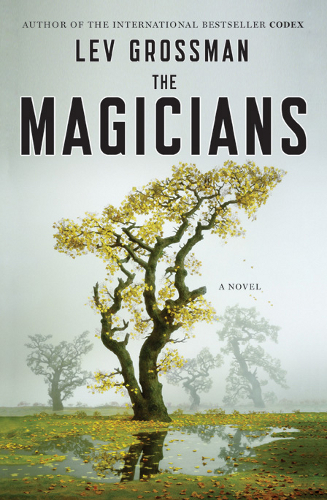
Lev Grossman's The Magicians. It basically took the love of children's fantasy books like Harry Potter and the Narnia series and crapped all over them. What was the point of all that? Just the shock value of putting sex, drugs, copious drinking, depression and a general sense of dissoluteness into a book with magic and talking animals and such? I won't deny the cleverness of Grossman's constructions and world-building. But it mostly felt as if he just borrowed glory to tear it down. Like the scorpion stinging the frog in the middle of the river. If Narnia and Hogwarts are so empty and stupid, why do you think your book slagging them to be worthwhile?
The very worst touch was a silly little throwaway. Grossman posits a set of children's fantasy books called the Fillory series, which his main characters, teenaged magicians in the contemporary United States, all read as children. Some read it obsessively. Then they get to go to Fillory and find it a decidedly nonheroic, cutthroat place. At the very end, Grossman reveals that Christopher Plover, the author of the Fillory books, and something of a stand-in for C. S. Lewis, was a pedophile. It advances the plot not one whit. It does nothing to enrich the themes of the book.
Lots of people have problems with the Narnia series. The Christian allegories are sort of facile. The casual British Empire racism is barely concealed. There is the famous problem of Susan--the contempt Lewis shows for women who outgrow childhood. That's all real and worth much adult discussion and criticism. Philip Pullman has made countering C. S. Lewis practically his life's work. But I think that opposition is at least somewhat grounded in respect for the Narnia books as good, solid stories. I don't think he'd have bothered if he just thought the books sucked. At any rate, Pullman does not casually, gratuitously call Lewis a child rapist as Grossman does. It could be argued that Plover isn't a direct stand-in, but I think it's close enough.
I guess my anger means I similarly think The Magicians is also good enough to merit anger, rather than bored dismissal. That's reasonable. As I said, The Magicians is not an uninteresting book. Grossman is obviously trying for some larger thematic claims about the role of fantasy in complicated adult lives, among other things. It's a little too on-the-nose at times, particularly in a late scene in which the humans visiting Fillory interrogate the local god (an Aslan surrogate) with basic questions on the problem of evil. (It reads a bit like a prose translation of XTC's bitter Dear God.)
Not sure I'll read the sequel, The Magician King. If it's just more young magicians killing their lost illusions with alcohol, I may pass. I'm curious to see if anything better develops though. The reviews are somewhat encouraging.
Friday, November 18, 2011
People see the harm in what excessive candor can do

We all tend to carry in our heads a list of greatest movies. Almost everyone loves Citizen Kane, The Godfather, Casablanca, etc. Then there are movies that are more private treasures, ones which hit us where we live. We feel a little more possessive of them. We feel like we get these movies more than others do. Maybe that's a little snobby, and maybe that's OK.
A long way to begin a discussion of a movie that hits me pretty close: Whit Stillman's Metropolis. This is a tiny little film which came out in about 1990. In one sense I should not particularly be expected to identify with it. The story revolves around a core group of characters enjoying life as emerging members of New York high society. One earnest character resents the terms yuppie and preppie and in their place coins the term Urban Haute Bourgeoisie, UHB, pronounced "ubb." The time period is deliberately left a little ambiguous. The title cards announce that it's "Not So Long Ago." As the movie was shot on a tiny budget, Stillman took New York as he found it in the late 1980s. So the cars and clothes are from that era. But there are several cues indicating that the intended time is perhaps the late 1960s or early 1970s, when the old social order was rapidly crumbling. This leads to a running theme that the characters have an assumption of impending doom. They know that the system which served to ensure their life's path may no longer do so. It got them into Ivy League colleges (the movie takes place over Christmas break when they all return home to Manhattan). It was the era when the Ivies had a much larger proportion of gentleman's C-earning legacies than today. The system was then supposed to provide the men with jobs in prestigious law or finance firms, and the women with husbands in those firms, perhaps with positions running charity or arts organizations. But that is all ending in Metropolitan. The debutante balls are still going on, but have lost some of their import. They are an anachronism by this point--a woman attending college in 1970 is hardly in need of a social debut.
Stillman seems to blame the collapse of the family unit for the impending failure of the UHB youth. Several characters have divorced parents, and the splitting of households is shown to be a substantial financial setback. Nick Smith, the character played by Christopher Eigeman, is Stillman's alter ego, or at least the alter ego of Stillman's sardonic side. Nick articulates and defends the virtues of the class he belongs to. He loves the deb parties and the fine clothes. His fondest wish is that it would all continue, that the 20 year olds would become their parents. "I like everyone's parents," he says at one point.
One of the things I like so much about this movie is that it contains both cynical and earnest characters (Nick is both), and the cynical ones are not always given the advantage. They aren't privileged as clear-thinking realists. The earnest ones are given their due, and frequently have the better of the argument. The acting here meshes beautifully with the earnestness. The actors are in the main amateurs. Because the characters are also generally pretending to a greater degree of sophistication than they actually possess, the amateurishness works quite well. The dialogue feels mannered and rehearsed, as if the characters have been working on ideas and turns of phrases, waiting to unleash them whole in conversation. That is in fact how many collegians talk. What is charming is that the better characters (Audrey Rouget, Charlie Black) take their ideas very seriously. When avowed socialist Tom Townsend rationalizes his sudden incorporation into the elitist deb party culture, Charlie does not accept the inconsistency. "It's... it's untenable!" he sputters, and he believes with all his heart that showing that a behavior is untenable ought to be enough. We know that later in life, and not much later, he will tend to accept hypocrisy and compromise as necessary for getting through a life, but he doesn't yet.
Metropolitan also foresaw the Jane Austen boom. The plot is very loosely adapted from Mansfield Park. Tom Townsend and Audrey Rouget also discuss that book, a dialogue Stillman uses as commentary on the era. Mansfield Park features an exceptionally old-fashioned plot, in which young people left to their own devices, throw off the old morality by putting on a play. This is seen by the culture of the time as a gross moral lapse, a position taken by the book itself. Tom finds that ridiculous and believes Mansfield Park to be a bad book (he amusingly declares that he has not read it, but has read criticism of it, doubling his reading efficiency). Audrey defends the book and its idea of a virtuous heroine, a notion decidedly out of fashion in most 20th century literary fiction. The Mansfield Park play is given a parallel later in the movie, as despite Audrey's misgivings, the gang plays a truth game, in which the players must tell each other the absolute truth in response to any question. Cynthia, the shallowest character, does not see how truth can be bad, but Audrey knows otherwise.
I don't necessarily buy into all of Stillman's moral conclusions, but I appreciate that he's making arguments that very few filmmakers are even considering.
Stillman made two other movies, Barcelona and The Last Days of Disco, about characters like these at slightly later points in their lives. Both are also excellent. After more than a decade, he is due to release his fourth movie, Damsels In Distress, later this year.
Subscribe to:
Posts (Atom)